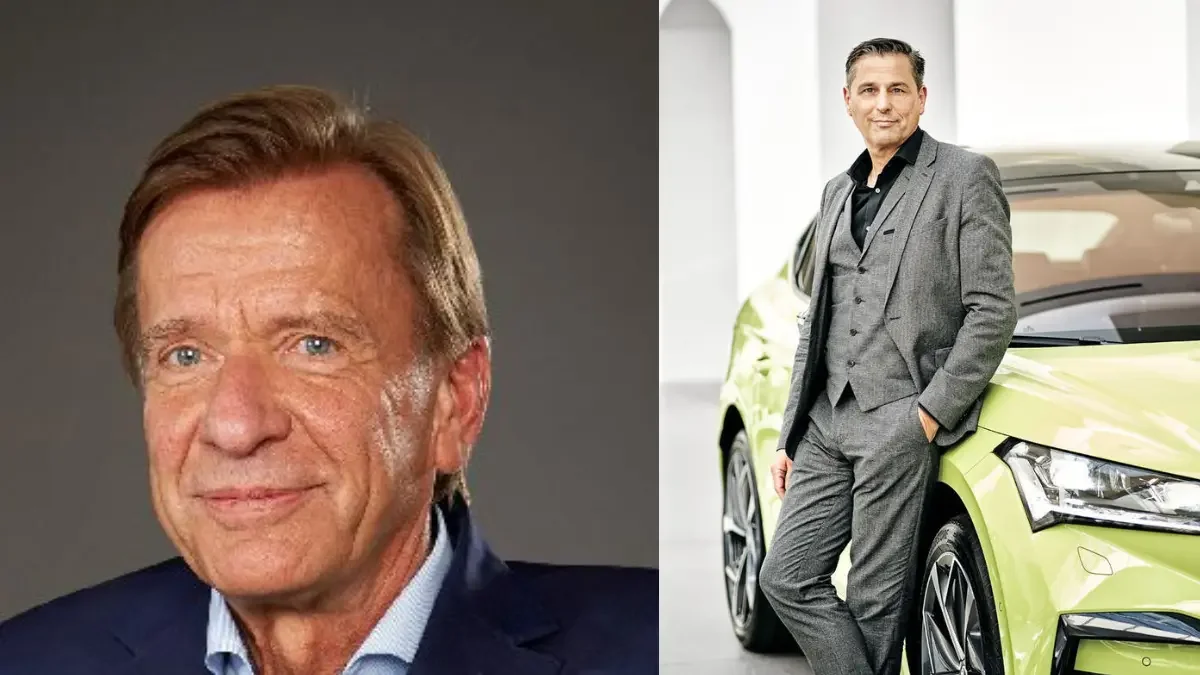
Volvo Cars' board of directors announced on Sunday that it has selected Klaus Zellmer to lead the Swedish automaker into its next chapter, ending months of speculation about who would eventually succeed Håkan Samuelsson at the helm. The announcement marks one of the more significant executive moves in the European automotive industry this year, pulling a proven brand leader away from Volkswagen Group's Czech subsidiary and placing him in charge of one of Scandinavia's most recognizable car brands.
Zellmer will officially step into the role no later than October 1, 2027, giving Volvo, Samuelsson, and the outgoing leadership team more than a year to manage a deliberate, structured transition. The company described the handover as intended to be seamless, with Samuelsson working alongside the board throughout the process to ensure continuity in strategy and operations during the changeover.
Who Is Klaus Zellmer?
Zellmer brings more than three decades of experience across some of the most storied names in the automotive world. He currently serves as Chairman of the Board of Management and CEO of Skoda Auto, a position from which he has overseen a period of substantial growth for the Volkswagen Group brand. Under his leadership, Skoda became one of Europe's best-selling car brands and delivered record results in 2025, with the company continuing that momentum into further growth and record electric vehicle deliveries during the first half of 2026.
Before taking the top job at Skoda, Zellmer held a seat on the Board of Management of Volkswagen Passenger Cars, where he was responsible for marketing, sales, and after-sales operations across the flagship VW brand. His roots in the industry, however, trace back even further. Zellmer spent more than 20 years at Porsche prior to joining Volkswagen's passenger car division, rising through a series of senior leadership roles that included serving as CEO of Porsche Deutschland and, later, CEO of Porsche's North American operations. That stretch at Porsche gave him deep exposure to the premium end of the market, while his years at Skoda demonstrated his ability to run a high-volume, value-focused brand — a combination Volvo's board sees as directly relevant to the challenges ahead.
Zellmer's academic and early career background adds another layer to his profile. After completing a degree in business administration, he spent several years working at the Institute for Automotive Economics at a German university of applied sciences before beginning his rise through the ranks of the auto industry.
Why Volvo Made the Move
Eric Li, Chairman of Volvo Cars, framed the appointment as a natural fit for where the company sees itself heading. According to the board's rationale, Zellmer's blend of expertise across both the premium and mass-market segments of the industry positions him well to guide Volvo through a period of significant transformation and shifting market conditions. The board expressed confidence that someone with experience steering a large-volume brand through recent turbulence — tariffs, EV demand fluctuations, and intensifying competition — could translate that experience directly to Volvo's own turnaround efforts.
For his part, Zellmer struck an enthusiastic tone in the company's announcement, describing the timing as a particularly important moment in Volvo's development and expressing eagerness to join the organization as it works through its next strategic phase.
The Backdrop: A Company Under Pressure
The timing of this announcement is not incidental. Volvo Cars, which is majority-owned by China's Geely Holding, has been grappling with a difficult operating environment. The company has struggled to meet previous profitability targets, weighed down by a combination of tariffs affecting international trade, softer-than-expected demand for electric vehicles, and elevated development costs tied to bringing new models to market.
Just days before the CEO announcement, Volvo held a strategy day during which Samuelsson laid out an ambitious roadmap for the years ahead: a plan to launch 13 new models between now and 2030, with the explicit goal of doubling the company's market share. That plan comes against a backdrop of ongoing headwinds, including the fallout from U.S. tariffs and a pronounced slowdown in sales across the critical Chinese market — a market where Volvo, despite its Chinese ownership, has faced increasing competitive pressure from domestic manufacturers.
Samuelsson's own tenure adds important context to why this transition is happening now. He originally led Volvo from 2012 to 2022, a period widely credited with stabilizing and modernizing the brand after its acquisition by Geely. He was then brought back in April 2025, specifically tasked with helping turn around the company's performance during a particularly challenging stretch. At 75 years old, Samuelsson signaled last week that he does not intend to continue working full-time once his current contract expires in April, effectively setting the clock on the succession plan that culminated in Sunday's announcement.
What Comes Next for Volvo
The extended runway before Zellmer formally takes over — with an effective date no later than October 1, 2027 — gives the company time to execute the transition without disrupting the rollout of its ambitious new model strategy. It also gives Zellmer time to formally exit his responsibilities at Skoda and the broader Volkswagen Group, where he has spent years building relationships, refining brand strategy, and steering a value-oriented brand through its own period of electrification and growth.
For Volkswagen Group, Zellmer's departure creates its own succession question at Skoda, a brand that has become an increasingly important profit contributor within the larger VW portfolio. How the Wolfsburg-based conglomerate chooses to fill that vacancy will be worth watching in the coming months, particularly given how central Skoda has become to Volkswagen's volume and margin targets in Europe.
For Volvo, the appointment signals a clear philosophy from the board: rather than promoting from within or seeking an executive with a purely premium-brand pedigree, the company opted for a leader with direct, recent experience managing the pressures of a mass-market brand navigating tariffs, EV transition costs, and competitive disruption — the exact set of challenges Volvo itself is currently facing.
The Bigger Picture
This leadership change arrives at a pivotal juncture for the broader automotive industry, as legacy manufacturers across Europe continue to recalibrate their strategies in response to shifting trade policy, the uneven pace of EV adoption, and intensifying competition from both established rivals and new entrants. Volvo's decision to bring in an executive with a track record spanning both the luxury and volume segments suggests the company is betting on operational pragmatism and brand-building experience over any single area of specialization.
Whether Zellmer can replicate the kind of turnaround and growth he oversaw at Skoda within Volvo's more complex, EV-heavy portfolio remains to be seen. But with more than a year of transition time built into the plan, and Samuelsson's ambitious 13-model strategy already in motion, Volvo appears to be positioning itself for a leadership change designed more around continuity and long-term planning than sudden disruption.
As the automaker works through the remainder of 2026 and into 2027, industry observers will be watching closely for early signals of how Zellmer plans to build on — or reshape — the strategic direction Samuelsson has already set in motion.